

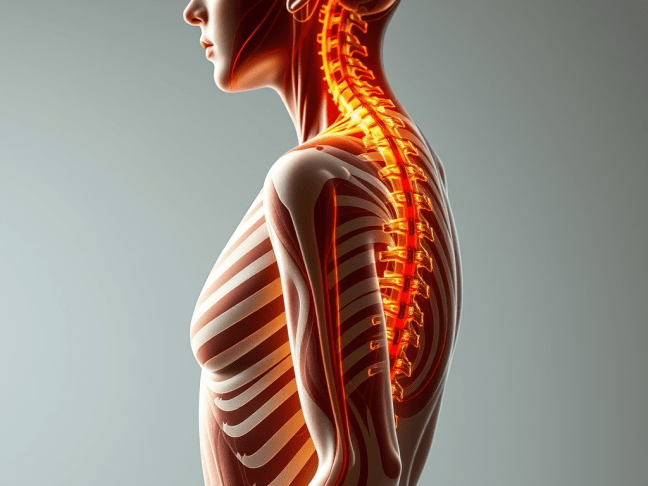
In the study of Traditional Chinese Medicine (TCM), certain anatomical and theoretical structures captivate both the imagination and intellect of students. Among them, the Urinary Bladder (UB) channel’s dual trajectories along the spine—at 1.5 cun and 3 cun lateral to the posterior midline—invite both reverence and curiosity. Particularly, the outer line at 3 cun appears to possess an uncanny efficacy in treating psychoemotional disorders, often described in TCM texts as accessing the spirit of the organs. While this has long been accepted on a theoretical level, the physiological rationale remains elusive. This article proposes a hypothesis—drawing on both classical theory and evolutionary neuroscience—explaining why the 3 cun line may offer a more profound access point to the psyche and soma.
The Dual Architecture of the Bladder Channel
The inner line (1.5 cun), where the Back Shu points are located, lies over the paraspinal muscles and is anatomically adjacent to the sympathetic ganglia. These points influence the autonomic nervous system and primal survival mechanisms—breath, digestion, heartbeat, hormonal rhythms—all functions associated with baseline homeostasis. In this sense, the inner line speaks to the core of Yin, the root of embodied survival.
The outer line (3 cun), however, overlays deeper fascial layers and muscle groups such as the thoracolumbar erector spinae. These postural muscles, though rarely acknowledged in classical texts, hold an evolutionary significance: they are intimately involved in keeping the body upright, a hallmark of bipedalism. From an evolutionary perspective, standing upright not only altered our physical structure but also catalyzed shifts in our brain-body relationship. With posture came presence. With verticality came vulnerability—and emotional complexity (Grunhaus et al., 2023).
Posture and the Psychological Self: A Somatic Dialogue
The way a person holds themselves—chest lifted or collapsed, shoulders back or rounded, head aligned or forward—offers a profound map of their internal state. Posture is not merely mechanical; it is biographical. The 3 cun line follows the outermost margins of the paraspinal fascial chains and postural musculature, which not only stabilize the skeletal frame but also store the body’s emotional responses to life experiences.
In psychophysiological research, posture is increasingly recognized as both a reflection of mental state and an influence upon it. Upright, open postures are associated with increased confidence, lower cortisol levels, and heightened vagal tone—markers of parasympathetic activation (Reyes & Chiu, 2021). Conversely, collapsed or rigid postures are often associated with trauma responses—dorsal vagal withdrawal, hypervigilance, or freeze states (McCarty & Childre, 2020).
The 3 cun line intersects with these somatic expressions of psychological tone. The body does not lie: it encodes chronic stress, grief, repression, or anxiety into muscular tension, particularly in the large, longitudinal tracts that define our bearing. These fascial highways serve not only as tensile structures but as neural conductors and memory repositories. In this way, the UB channel’s outer line provides access to the psyche not metaphorically but materially—through touch, pressure, and presence.
A Tour of the Points: Somatic Gateways to the Psyche
More specifically, if we examine points such as BL-42 (Po Hu, T3 level) over the posterior lungs, we find its role in accessing grief and the corporeal soul (Po) may relate to the presence of the upper thoracic sympathetic trunk and connections to the cardiopulmonary plexus, influencing breath and emotional respiration. The T3 level corresponds anatomically to the upper lung fields, pleura, and associated intercostal nerves—all of which have a direct influence on respiratory patterns tied to sadness and release.
BL-44 (Shen Tang, T5 level), associated with the Heart and spirit (Shen), lies above the cardiac sympathetic fibers and near the transverse processes that relate to cardiac innervation, providing both a symbolic and neurological bridge to the Heart’s emotional tone and its energetic radiance. This area often responds to the touch of the practitioner with a sense of emotional openness—or guardedness—reflecting the patient’s capacity for connection or their defenses against vulnerability.
BL-47 (Hun Men, T9 level), the “Door of the Ethereal Soul,” aligns anatomically with the lateral diaphragm attachments and liver innervation through the phrenic and lower intercostal nerves. These structures modulate not only the act of breathing but the capacity for emotional digestion and vision—qualities governed by the Liver and the ethereal soul (Hun). The diaphragm’s tendency to contract under emotional stress reflects its role in holding back unprocessed anger or stifled direction, which BL-47 may help release (Bordoni & Morabito, 2022).
BL-52 (Zhi Shi, L2 level) overlays the renal fascia and lumbar plexus, tying directly into the adrenal glands and sympathetic outflow to the kidneys. This region governs both the storage of Jing (essence) and the mobilization of fear or willpower (Zhi), providing a physical substrate to the Kidney’s relationship with drive, security, and ancestral memory.
Neurobiological Mirrors: The Dorsal Horn and Somatic Memory
Neuroscientifically, the outer line interfaces with the dorsal horn and nerve root structures that are increasingly recognized for their role in affective processing. These spinal segments serve as conduits between sensory experience and emotional encoding. The tissues along the 3 cun line are thus not merely structural; they are expressive. They reveal how we feel—through tension, pain, and holding patterns. They do not just respond to trauma, they remember it.
In modern somatic psychology, the notion of “body armor” corresponds eerily to the chronic rigidity often palpated along the 3 cun line. These tensions are not only protective responses but also crystallizations of unresolved psychological conflict. The fascial adhesions and taut bands found in this area may be viewed as the physical manifestation of the Po’s grief, the Shen’s fragmentation, or the Zhi’s exhaustion.
This somatic memory is not random but follows a neurobiological architecture that maps closely with the TCM concept of Shen disturbance, or emotional dysregulation. In essence, the outer line becomes a neuro-emotional map of the patient’s biography, layered within the musculature and connective tissues that maintain form and transmit force (Cacciatore et al., 2020).
Guardian of the Inner: The Outer Line’s Protective Intelligence
In this light, the outer line may be seen as the guardian of the inner. While the inner line maintains vital processes, the outer reflects and, at times, defends them through emotional expression. The outer musculature bracing in response to psychological threat can be seen not merely as a dysfunction, but as a somatic defense mechanism—an externalized form of internal preservation. In Daoist terms, the outer protects the inner not only physically but emotionally.
This dynamic underscores the interplay between Yin and Yang, substance and movement, Shen and Jing. The outer musculature, through tension and collapse, engages in a silent dialogue with the inner organs, expressing both harmony and discord. Emotions are not peripheral to health—they are central to it. They are protection. They are adaptation.
From this perspective, each UB point on the outer line becomes more than a name or a protocol—it becomes a portal. When the practitioner touches BL-44, they touch the part of the patient that dares to love or has learned to fear it. When they needle BL-52, they may awaken not only the adrenal cascade but also the buried resolve to endure.
Clinical Implications: A Reframing of the Outer Line
Such insights may also shed light on clinical observation: Back Shu points are often used for tonification—deeply nourishing the root—whereas Mu points on the abdomen are more frequently employed in the treatment of acute disorders, acting as rapid responders. The back, especially the outer line, holds the long story of the person—their posture, their pain, their perseverance. To touch these points is to speak with the body’s emotional biography.
As clinicians, we may begin to regard the 3 cun line not simply as a secondary set of points, but as primary to the work of psychoemotional healing. These points, perhaps more than any others, allow the practitioner to access the deep back brain, the limbic system, and the ancient affective circuits that determine our orientation to self, other, and world.
When the outer line is treated, particularly through techniques that respect the fascia and the breath, such as Tui Na, cupping, or gentle needling with prolonged retention, a profound release can be felt—not only muscular but spiritual. It is as if the body exhales a story long held.
Conclusion: Revealing the Spirit Through the Outer Line
This hypothesis suggests a reframing of the outer UB channel not as secondary, but as essential in accessing the limbic, expressive, and neuropsychological dimensions of human experience. Perhaps it is not merely that the 3 cun line treats the spirit—it reveals it. In doing so, it teaches us a subtle but vital truth: posture is psychology, fascia is memory, and the back is a living text—inscribed with emotion, resilience, and the indelible ink of experience.
Biography
Monica Ander is a provincially registered Traditional Chinese Medicine Practitioner with 3,400+ hours of training in acupuncture and herbal medicine. She teaches at Kootenay Columbia College and has 20 years’ experience in manual therapy, massage, and sports rehab.
Outside the clinic, she enjoys mountain sports and the outdoors.
Book a consultation: (250) 505-6833 | monicaander36@gmail.com
References
Bordoni, B., & Morabito, B. (2022). The diaphragm and its fasciae: Anatomy and clinical implications. Cureus, 14(2), e22201. https://doi.org/10.7759/cureus.22201
Cacciatore, T. W., Johnson, R. G., & Cohen, R. G. (2020). Posture, movement, and emotional state: A review of musculoskeletal and somatic pathways. Journal of Bodywork and Movement Therapies, 24(3), 196–205. https://doi.org/10.1016/j.jbmt.2020.02.005
Grunhaus, L. J., Pelicci, A., & Netti, V. (2023). Postural affective integration: A neuroevolutionary approach to verticality and vulnerability. Frontiers in Psychology, 14, 1129487. https://doi.org/10.3389/fpsyg.2023.1129487
McCarty, R., & Childre, D. (2020). Heart rate variability and emotional self-regulation in trauma recovery. Global Advances in Health and Medicine, 9, 1–10. https://doi.org/10.1177/2164956120906393
Reyes, A. T., & Chiu, H. (2021). The effect of posture and breath on psychological resilience: A somatic perspective. Psychology of Health & Medicine, 26(10), 1258–1266. https://doi.org/10.1080/13548506.2021.1875076
 Osteopathy and Acupuncture by Monica Ander in Nelson BC